How Facebook Marketplace Seller Ratings Work


In short, seller ratings on facebook Marketplace work simply. Buyers give a seller a star rating after a Marketplace transaction, and Facebook combines those ratings into a public seller score; the score uses a 1-to-5 star scale. The score usually appears on the Marketplace profile after at least five ratings, so a new seller may have no visible score. Ratings can help shoppers judge communication, honesty, and reliability, but they don’t prove every deal will be safe or successful.
Facebook Marketplace Seller Ratings Explained
Facebook Marketplace ratings come from buyers, not from the seller. A buyer’s feedback becomes part of the seller’s overall score when Facebook has enough rating data to show it publicly. The seller can’t select which ratings are included.
The important parts are the star score, the number of ratings, and the transaction behind each rating. A single low score matters more when a seller has only a small number of ratings. For example, a high score based on very little feedback gives you less evidence than a similar score supported by many transactions.
| Part or input | What it does | What you notice when it goes wrong |
|---|---|---|
| Buyer rating | Gives one to five stars | Low overall seller score |
| Completed transaction | Connects feedback to seller activity | Rating prompt may not appear |
| Seller profile | Displays public rating information | Score may be missing |
| Rating count | Shows how much feedback exists | Small sample feels uncertain |
| Marketplace messages | Help identify the transaction | Wrong seller may be rated |
| Facebook review tools | Handle reports and disputes | Unfair content may remain temporarily |
Use the rating count alongside the score, rather than judging the stars alone. If the count is small, read the available feedback cautiously and compare it with the seller’s messages and transaction details. A rating doesn’t independently prove that every interaction with the seller will be the same.
A seller doesn’t choose which stars to receive. Facebook collects buyer feedback and calculates the visible score from that feedback. Buyers should check that they’re rating the correct seller and transaction, especially when several listings or conversations look similar.
The exact screen can vary by app version, device, and account. If the rating option is missing, first check whether Facebook recognizes a completed transaction; otherwise, check the current Facebook Help Center instructions. Ratings may also be temporarily unavailable while Facebook’s tools process a report or account change.
How Facebook Marketplace Ratings Work
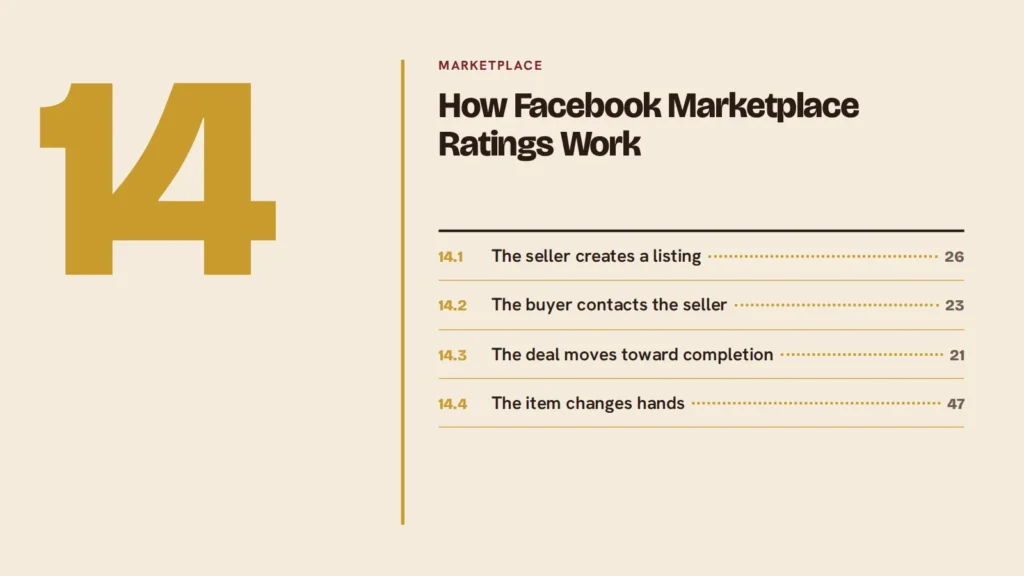
A normal rating cycle starts with a listing and ends with buyer feedback. The buyer doesn’t rate a random Marketplace account just because they viewed an item; the rating option is connected to a seller interaction that Facebook recognizes.
The process can look different for shipped items, local pickups, canceled deals, and conversations that never become sales. Facebook controls when the rating prompt appears, so there isn’t one guaranteed schedule for every transaction.
-
The seller creates a listing. The item, price, photos, description, location, and delivery choices become the information the buyer uses. This stage may last minutes or several weeks, depending on when the item sells. A listing that receives messages but no completed deal may not create a normal buyer-rating opportunity.
-
The buyer contacts the seller. Messages usually cover availability, condition, price, pickup, shipping, or payment. The buyer should keep the conversation connected to the correct listing. If several sellers offer similar items, check the name and listing before rating anyone.
-
The deal moves toward completion. The buyer and seller agree on pickup, delivery, or another available Marketplace method. Facebook may use the listing or message history to identify the transaction. If plans end before the item changes hands, the rating prompt may not appear or may not represent a completed sale.
-
The item changes hands. For local sales, this happens at pickup; for shipped sales, it happens when the buyer receives the package. The time depends on the agreed arrangement and shipping service. Don’t assume that sending one message starts the rating clock, because Facebook doesn’t publish one universal timing rule for every transaction type.
-
Facebook may show a rating prompt. The buyer can then choose a star score based on the transaction. The prompt might appear in Marketplace, in messages, or through a notification, depending on the current app design. If it doesn’t appear, the buyer should check the listing, Marketplace profile, and Facebook Help Center rather than repeatedly sending messages.
-
Facebook combines the feedback. The seller’s visible score reflects the ratings Facebook has accepted for that account. A new seller may have too little feedback for a public score. Once five ratings are available, Facebook generally shows the seller rating on the Marketplace profile, although screens and eligibility can change.
-
The buyer or seller can report a problem. A rating that appears abusive, fake, or unrelated to a transaction can be reported through Facebook’s available tools. Reporting doesn’t guarantee removal. Facebook reviews the content under its policies, and the decision may take time or may not favor the person who reported it.
Why Ratings Change Marketplace Trust
A low seller rating usually points to a pattern of buyer experience, but it doesn’t identify the exact failure by itself. The problem could involve poor communication, an item that differed from its description, a late shipment, a canceled pickup, or a disagreement about price.
The rating score also needs its count. A 5-star score from five ratings gives you less information than a similar score from dozens of ratings. A new seller can have a perfect score because only a small amount of feedback is visible.
Look at the rating beside the seller’s recent behavior. If messages are clear, the item details match the photos, and the payment plan is reasonable, a medium score may need more investigation rather than instant rejection. If the score is low and the seller avoids questions, changes the price, or pushes an unusual payment method, walk away.
The Facebook Marketplace seller rating guidance explains that ratings come from people who bought from a seller and that the public rating appears after Facebook receives enough ratings. Facebook’s help information is the best place to check the current rating process because Marketplace screens can change.
The biggest trade-off is speed versus confidence. A highly rated seller with little feedback may offer a good deal, but you have less evidence. A seller with a lower score and a long history may deserve a closer look, but a repeated complaint about missing items or misleading descriptions is a stronger warning.
A common mistake is treating the star number as a full background check. That can cost you money if you ignore the listing details, pay before seeing the item, or accept a rushed meeting. Ratings describe past buyer feedback; they don’t guarantee the next transaction.
If the score is low, inspect the rating count and recent pattern; if the score is missing, check whether the seller has enough ratings and review the transaction details instead. Facebook doesn’t show every part of its calculation, so you can read the rating count and visible feedback, but not a complete formula for each star.
What You Control in Marketplace Ratings
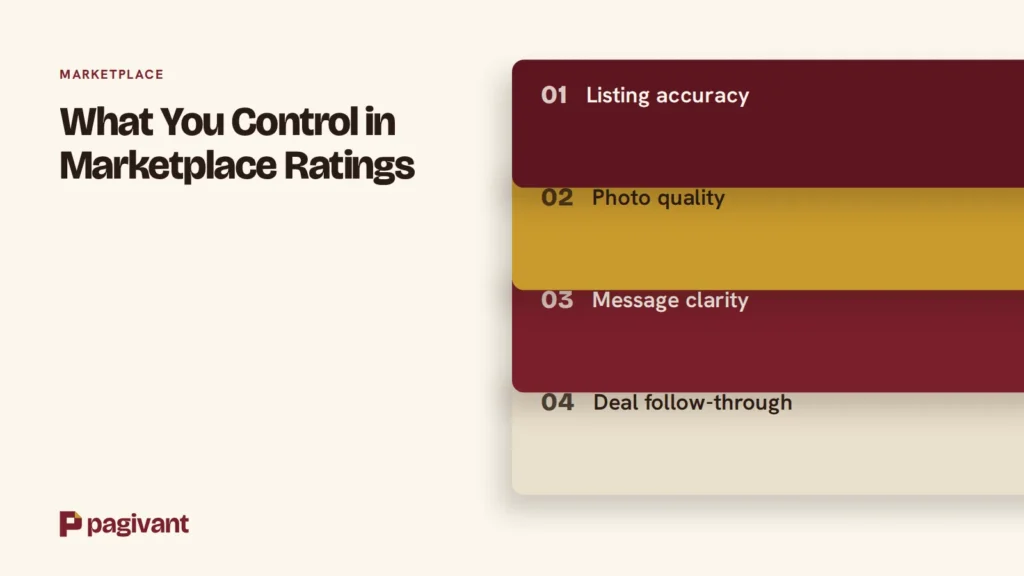
You control the information you give buyers and how you handle the transaction. You don’t control whether every buyer agrees with your price, reads the listing, or leaves feedback.
These choices can improve the chance of accurate ratings, but they can’t force a positive score. A buyer can rate based on the whole interaction, including communication and follow-through.
You control
- Listing accuracy: Describe damage, missing parts, size, and condition clearly.
- Photo quality: Use current photos that show the actual item.
- Message clarity: Answer questions about price, location, and availability.
- Deal follow-through: Keep the agreed time, place, and price.
- Payment boundaries: Use payment methods allowed by the transaction.
Facebook controls
- Rating eligibility: Facebook decides when a buyer can rate.
- Public display: Facebook decides when enough ratings exist to show a score.
- Score calculation: The platform doesn’t provide a complete public formula.
- Content review: Facebook decides whether reported rating content violates policy.
This system isn’t for sellers who want complete control over their public image or guaranteed positive feedback. If a rating dispute involves fraud, threats, stolen property, or a payment loss, stop arguing in messages and contact Facebook support or the appropriate local authority; don’t try to fix a serious problem through technical account changes.
Your best control ends at honest listing details, clear communication, and a completed deal. The final score remains a platform result, not a certificate that you can edit whenever you want.
Better Habits for Marketplace Ratings
Accurate listings create better ratings because buyers compare what they received with what they expected. The habits below follow directly from how Marketplace feedback works.
-
Write the condition before naming the price. State scratches, repairs, missing accessories, and working problems in the listing. For electronics, state whether each major function works and when you last tested it. Use close-up photos for damage, not only a general image. A low price doesn’t cancel out an undisclosed defect, and surprise defects can lead to poor feedback.
-
Confirm the deal in writing. Before pickup or shipping, repeat the item, final price, meeting place, and payment method in Messenger. If either detail changes, update the message before the handoff. This gives both people one clear version of the agreement.
-
Keep one listing tied to one item. Mark an item sold or unavailable when the deal finishes. Leaving several old listings active can create confusion, especially when buyers contact you about different versions or prices. Delete or edit duplicate listings when they no longer match what you have.
-
Don’t pressure a buyer for stars. Ask for honest feedback only after the transaction is complete. Repeated requests, arguments about the score, or offers of money for a positive rating can make a normal problem look worse. If the buyer reports a problem, respond to the issue instead of discussing the rating.
-
Check the rating count, not only the stars. A score with five ratings gives a smaller evidence base than a score built from many completed transactions. If the count is small, place more weight on the current listing and your direct conversation.
These habits can reduce avoidable complaints, but they won’t remove every disagreement. If the item’s condition or value is hard to judge, send extra photos and let the buyer decide before payment. If inspection is impossible, describe that limitation and agree how problems will be handled before shipping.
Prefer a done-for-you option? Read about Facebook Marketplace Account Setup.
Frequently asked questions
Facebook Marketplace ratings are easier to judge when you separate the score from the transaction details. The questions below cover the points that often confuse buyers and sellers.
Can buyers rate a seller without buying?
Usually, no; Marketplace seller ratings are meant for people who bought from that seller. Facebook decides whether an interaction qualifies and when the rating prompt appears, so someone who only viewed a listing or exchanged a message may not receive it. If a deal was canceled, a conversation alone doesn’t prove a completed sale or justify a rating.
Why is my Facebook Marketplace rating not showing?
A rating may not show if the seller hasn’t reached Facebook’s display threshold, the transaction isn’t recognized as eligible, or the app is outdated. Facebook generally requires five ratings before a seller rating appears publicly. Check the seller profile, update Facebook, and review Help Center instructions; if the score still seems wrong, use Facebook’s built-in support or reporting option.
How long does it take for a Marketplace rating to appear?
There’s no single public time period that applies to every Marketplace rating. The prompt and visible score depend on Facebook recognizing the transaction, the buyer submitting feedback, and the platform processing it. A buyer should check after the item has changed hands, then look in Marketplace and Messenger. If nothing appears, the buyer can check the listing and Facebook’s current rating instructions; repeatedly messaging the seller won’t create the option.
Is it safe to trust a five-star Marketplace seller?
No; a five-star score is useful evidence, but it isn’t a safety guarantee. A high score may also come from a small number of ratings. Trust should come from several matching signals, including clear answers, realistic pricing, and a transaction plan you can accept.
What happens if a buyer leaves an unfair rating?
Facebook may review a reported rating when you use its available reporting tools, but removal isn’t automatic. Save the listing, messages, payment records, and details showing why the rating is unrelated, abusive, or misleading. Don’t threaten the buyer or create a retaliatory rating. If the issue involves fraud or a financial loss, keep the evidence and contact the payment provider or local authority as appropriate.
Does a Marketplace seller rating matter?
Yes, it can affect how much confidence a buyer gives a seller before messaging or paying. The score matters more when the rating count is substantial and the feedback matches the current listing. It matters less when the account is new, the count is small, or the seller’s current behavior looks different. Use the rating as one signal, not as a replacement for checking the item and transaction terms.
Conclusion
A Marketplace rating is a quick record of buyer feedback, not a complete seller history. Read the score with its rating count, compare it with the current listing, and stop when the deal starts asking you to ignore clear warning signs.

Derek Campbell writes about Facebook features, tools, and account management, covering topics such as account troubleshooting, Business Manager, Facebook Marketplace, and outreach strategies. His content also explores Facebook Groups, community engagement, and ways to connect with relevant audiences. His writing emphasizes practical Facebook know-how, from navigating Marketplace and managing business communities to building meaningful connections through Groups and outreach.
Checked against Facebook’s own help and policy pages on the date shown above.