What to Check Before You Pay on Facebook

Before you send money, check the seller’s profile age, transaction history, and payment method protection on Facebook. You should only proceed if the account is over six months old, has verifiable reviews from real buyers, and accepts payments through Meta Pay or a credit card with fraud coverage.
Your safety depends on three variables that change for every transaction: the seller’s verification status, the marketplace category, and your chosen payment platform. These factors determine whether you have any recourse if the item never arrives or differs significantly from its description.
Who needs these Facebook payment checks
Shoppers browsing Facebook Marketplace for local pickup need this guide most because they lack automated shipping protections. These buyers often face pressure to use cash apps or direct transfers that offer zero refund options when things go wrong. This page serves people buying physical goods directly from individual sellers rather than established businesses.
People purchasing from verified Facebook Shops with checkout already built in don’t need these manual checks. Meta’s commerce policies automatically cover those transactions through their purchase protection program, so the risk profile is completely different. If you’re buying digital services, event tickets, or rental deposits, this advice doesn’t apply either since those categories follow separate dispute resolution paths.
The assumption here is that you’re dealing with an unverified individual seller in a peer-to-peer transaction. If the listing uses integrated checkout, read Meta's Purchase Protection terms for your order instead. Local pickups are not covered. Everyone else should treat every transaction as potentially risky until proven otherwise through the verification steps below.
What Meta Purchase Protection covers
Purchase Protection applies only to orders you pay for with checkout on Facebook and have shipped. Meta’s help pages say local pickups, Messenger transactions, and purchases through third-party sites or other messaging services don’t qualify.
For a shipped checkout order, report any problem to the seller within 3 days after tracking shows delivery. If there is no tracking, report it within 7 days of payment. If the seller doesn’t resolve it within 2 business days, you can file a claim with Meta. Meta decides each claim.
Factors deciding payment safety
Seller verification status matters more than any other factor because it determines your baseline trust level. Accounts created within the last six months deserve extra scrutiny compared with established profiles. Check the “About” section for join date and look for linked phone numbers or email addresses that suggest a real person behind the account.
Payment method selection directly controls your ability to recover funds after problems occur. Credit cards processed through Meta Pay provide chargeback rights that debit cards and peer-to-peer apps can’t match. The Federal Trade Commission notes that credit card protections give consumers legal leverage that cash alternatives simply don’t offer under federal law.
Product category affects both scam likelihood and available remedies. Electronics and designer goods attract counterfeiters who exploit buyer urgency, while furniture and household items typically involve legitimate local sellers. High-value electronics require additional verification steps like serial number checks and original receipt requests that lower-risk categories don’t demand.
Communication patterns reveal seller legitimacy faster than profile metrics alone. Legitimate sellers respond to specific questions about condition, defects, and meeting logistics without deflection. Vague responses, pressure tactics, or refusal to communicate through Messenger are reliable warning signs regardless of how polished the listing appears.
Listing price relative to market value signals potential fraud when it deviates dramatically. Research at least five similar sold listings to establish realistic pricing before engaging further with unusually cheap offers.
Verifying seller and listing details
-
Open the seller’s profile and locate the account creation date in the About section. Accounts younger than six months require extra scrutiny including reverse image searches on all listing photos. If you can’t find the join date or it shows recent creation, treat the transaction as high-risk.
-
Search the seller’s name plus “scam” or “review” in Facebook search and external search engines. Look for complaint posts in local buy/sell groups or consumer protection forums. Three or more negative reports from different accounts within the past year means walk away immediately.
-
Request additional photos showing the item from angles not in the original listing. Ask for a photo with today’s date written on paper next to the product. Sellers refusing custom photo requests are often using stolen images from other platforms.
-
Verify serial numbers or authenticity markers for branded items before agreeing to meet. Contact the manufacturer’s customer service with the serial number to confirm it hasn’t been reported stolen or blacklisted. This step takes five minutes but prevents buying unusable merchandise.
-
Insist on communicating exclusively through Facebook Messenger rather than moving to text or email. Platform messaging preserves evidence needed for disputes and keeps your personal contact information private. Sellers pushing for off-platform communication are avoiding accountability.
-
Confirm the exact meeting location is public, well-lit, and has security cameras present. Police station parking lots or designated safe exchange zones are ideal for high-value transactions. Never agree to private residences, remote locations, or meetings after dark regardless of seller assurances.
-
Test the item thoroughly during the in-person inspection before transferring any money. Bring batteries for electronics, measure dimensions for furniture, and verify functionality matches the description exactly. Once payment leaves your hands, recovery becomes nearly impossible.
-
Complete payment only after confirming the item matches expectations completely. Use Meta Pay or credit card processing when available rather than cash or instant transfer apps. Document the transaction with screenshots of the listing, messages, and payment confirmation.
If you can't find the seller's join date in the About section or aren't sure what it shows, ask our team and we can check it with you.
The judgment call separating successful transactions from costly mistakes happens during the in-person inspection. If anything feels wrong, seems different from photos, or the seller rushes you, trust that instinct and walk away. No deal is worth ignoring red flags just because you’ve already invested time traveling there.
Common transaction scenarios compared
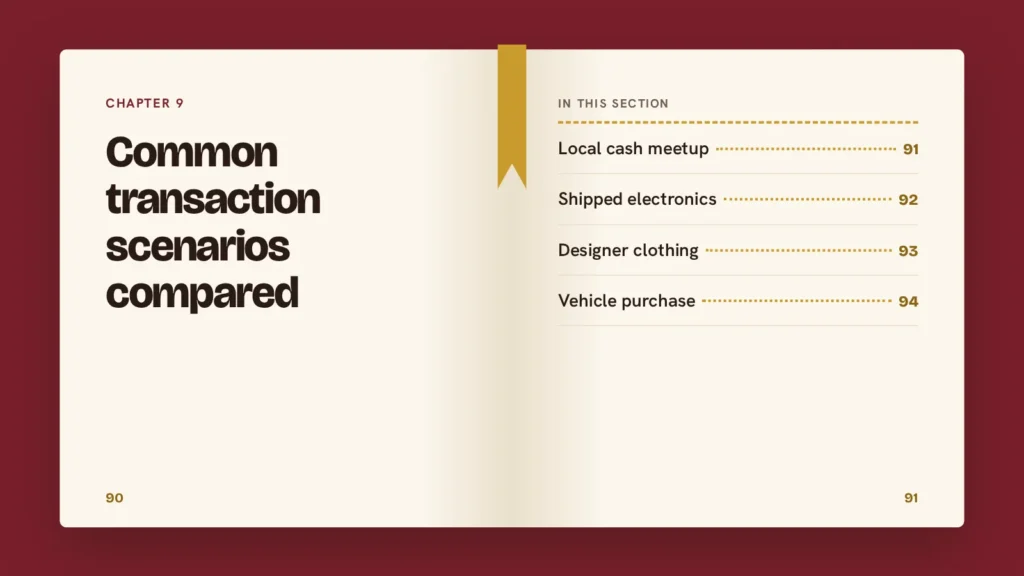
Match how much you check to the type of purchase. Different buying situations require adjusted verification approaches based on their unique risk profiles. What works for local furniture won’t protect you purchasing shipped electronics from distant sellers. Match your verification intensity to the specific transaction type you’re facing.
| Situation | Verification action | Time investment | Warning sign |
|---|---|---|---|
| Local cash meetup | Public location + live test | 30 minutes | Refuses public meeting |
| Shipped electronics | Serial check + video call | 45 minutes | Won’t show item live |
| Designer clothing | Authentication service | 2-3 days | Price under 50% retail |
| Vehicle purchase | VIN report + mechanic inspection | 2 hours | Title doesn’t match ID |
| Rental deposit | Lease verification + landlord call | 1 hour | Requests wire transfer |
| Event tickets | Transfer through official platform | 15 minutes | Screenshot-only proof |
| Business services | Contract + portfolio verification | 1 week | No business license shown |
Each scenario carries distinct failure modes requiring targeted prevention strategies. Local meetups fail when buyers skip functional testing to avoid awkwardness. Shipped transactions collapse when purchasers accept tracking numbers as delivery proof without signature confirmation. Adjust your checklist based on which scenario applies rather than applying generic advice universally.
Details protecting Facebook purchases
Documentation preserving dispute options
Screenshot everything before, during, and after the transaction completes. Capture the original listing with price and description intact, all Messenger conversations including timestamps, and payment confirmations showing transaction IDs. Store these images in a dedicated folder rather than relying on platform message history that sellers can delete.
Written agreements matter even for informal peer-to-peer sales. Message the seller summarizing key terms like condition guarantees, return windows, or included accessories before paying. Their written acknowledgment creates evidence admissible in small claims court or useful for payment processor disputes. Verbal promises made during meetups carry no weight afterward.
Timing reducing exposure windows
Schedule transactions during daylight hours for personal safety and easier access to bank support if needed. Weekend evenings and holidays see reduced support staffing, making fraudulent charges harder to reverse quickly. Morning weekday transactions align with peak customer service availability if problems emerge.
Limit the window between agreement and completion to reduce interception opportunities. Scammers sometimes hijack legitimate seller accounts between initial contact and scheduled meetup dates. Reconfirm seller identity through fresh Messenger messages within 24 hours of the planned exchange rather than assuming the same person still controls the account.
Troubleshooting payment problems
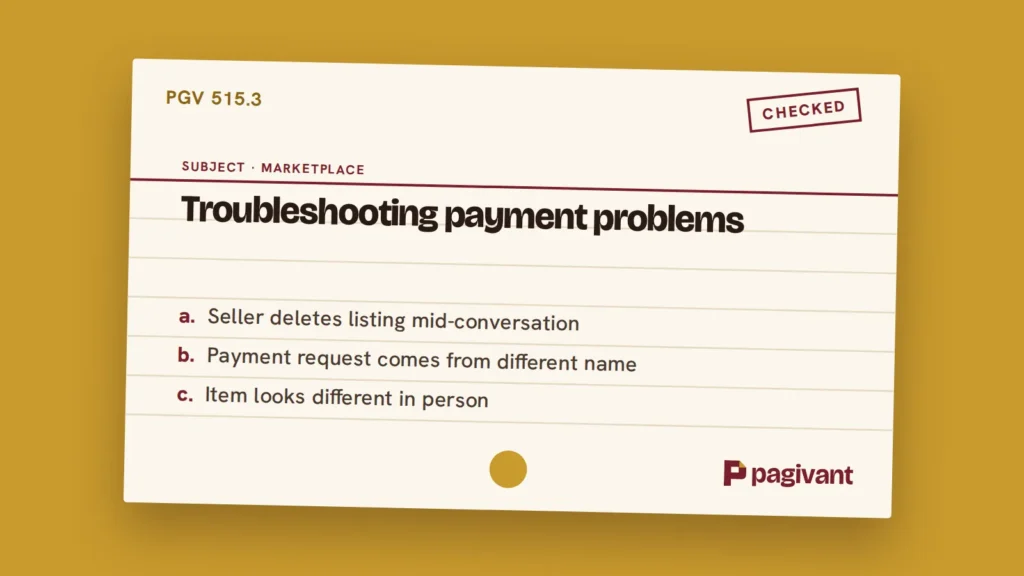
Recognizing early warning signs lets you exit transactions before losses occur. Trust pattern recognition over optimism when something feels inconsistent.
| What you notice | What it usually means | What to do first | How to stop it happening again |
|---|---|---|---|
| Seller deletes listing mid-conversation | Account compromised or scam | Screenshot conversation immediately | Reverify before rescheduling |
| Payment request comes from different name | Third-party fraud attempt | Decline and request new invoice | Only pay verified account names |
| Item looks different in person | Misrepresentation or bait-and-switch | Photograph differences before paying | Require current-date proof photos |
| Seller refuses platform messaging | Avoiding evidence trail | End communication entirely | Keep all talks in Messenger |
| Tracking shows delivered but empty box | Shipping fraud or theft | File carrier claim within 48 hours | Require signature confirmation |
| Account suddenly changes payment details | Hacked seller account | Call previous verified contact | Reconfirm via original channel |
| Pressure to complete quickly | Creating urgency to bypass checks | Slow down or walk away | Set personal verification timeline |
Pattern recognition improves with each transaction you complete safely. Document near-misses alongside successful purchases to build personal red flag libraries. Community groups often share emerging scam variations faster than official platforms update their warnings.
Rules governing Facebook transactions
Meta's Commerce Policies cover any attempt to buy, sell or trade products, even for free. They prohibit commerce content that breaks the Community Standards. They also prohibit promoting the sale of alcohol, adult products, human body parts or fluids, and certain subscriptions and digital products. Breaking them can lead to rejected or removed listings, or suspended access to commerce features. Review the current prohibited items list on Facebook’s Help Center before listing or purchasing restricted categories.
Federal Trade Commission regulations require online sellers to ship within promised timeframes or provide cancellation options. While enforcement against individual peer-to-peer sellers proves difficult, knowing these rules helps identify professional scammers posing as casual sellers. Business accounts must comply with mail order merchandise rules that personal accounts technically evade.
State consumer protection laws vary significantly regarding private party sales and implied warranties. Some jurisdictions consider “as-is” disclaimers unenforceable for known defects, while others uphold them strictly. Check your state attorney general’s website for specific marketplace transaction guidance applicable to your location.
Payment processor terms of service create additional contractual obligations beyond platform rules. PayPal Goods and Services, for example, requires sellers to provide valid tracking matching the buyer’s confirmed address. Understanding these layered protections helps choose payment methods strategically rather than accepting whatever the seller prefers.
Marketplace is built for consumer sales
Facebook Marketplace is intended for consumer-to-consumer sales. Businesses, and people acting in a business capacity, can face restrictions in some regions. Meta’s Commerce Policies name the European Economic Area, the Philippines and India.
The Commerce Policies apply across Facebook, Instagram, WhatsApp and Messenger, including Marketplace and Shops. A removed Marketplace listing is judged against these policies. A removal does not by itself mean the account is disabled.
Real costs of Facebook purchases
Transaction fees vary dramatically depending on payment method and seller account type. Peer-to-peer apps like Venmo charge nothing for personal transfers but eliminate purchase protection entirely.
Time investment represents hidden costs exceeding monetary expenses for cautious buyers. Expect 2-4 hours total for proper verification, communication, travel, and inspection on significant purchases. Factor this labor into value calculations when comparing Facebook prices against retail alternatives with built-in protections.
Risk exposure carries potential costs far exceeding purchase price when fraud occurs. Chargebacks may trigger account restrictions, disputed transactions can damage seller relationships in local communities, and time spent resolving issues compounds financial losses. Budget-conscious buyers sometimes accept higher upfront costs from protected channels to avoid catastrophic downside scenarios.
Opportunity costs emerge when verification delays cause missed deals on legitimately priced items. Balance thoroughness against market velocity in your niche. Fast-moving categories like gaming consoles require streamlined checklists, while slower markets allow comprehensive vetting without losing opportunities.
Maintaining transaction records afterward
Organize documentation by transaction date rather than seller name for easier retrieval during tax season or disputes. Include purchase price, payment method, item description, and outcome notes in each file. Digital spreadsheets work better than scattered screenshots when searching for specific transactions months later.
Monitor bank statements weekly for unauthorized charges following Facebook transactions. Fraudulent sellers sometimes test stolen payment methods with small amounts before larger unauthorized withdrawals appear. Early detection through regular statement review limits liability under most credit card agreements.
Update your personal red flag database after each completed transaction regardless of outcome. Note which verification steps proved valuable versus unnecessary for future reference. This personalized knowledge base becomes more accurate than generic advice as your transaction history grows across different categories and price points.
Retain records for at least one year beyond warranty periods or return windows. Tax deduction eligibility for business purchases requires contemporaneous documentation that casual recordkeeping rarely provides. Consult IRS Publication 463 for specific substantiation requirements if claiming marketplace purchases as business expenses.
When Facebook purchasing isn’t appropriate
High-value collectibles and luxury goods belong on specialized platforms with authentication services built in. Facebook lacks the expertise and infrastructure to verify Rolex watches, rare sneakers, or fine art effectively. Established resale platforms charge higher fees precisely because they assume authentication liability that Facebook explicitly disclaims.
International transactions with individual sellers carry customs, shipping, and legal complexities Facebook wasn’t designed to handle. Cross-border disputes involve multiple jurisdictions with conflicting consumer protection laws. Use established international marketplaces with escrow services and multilingual support teams instead of attempting direct peer-to-peer imports.
Business-to-business procurement requires invoices, tax documentation, and contractual terms that casual marketplace transactions can’t provide. Mixing personal and commercial purchasing creates accounting nightmares and potential tax compliance issues. Dedicated B2B platforms offer proper documentation trails that satisfy audit requirements Facebook transactions can’t produce.
Emergency purchases needing guaranteed delivery timelines shouldn’t rely on individual sellers with unpredictable schedules. Professional retailers with inventory systems and shipping partnerships provide reliability that peer-to-peer arrangements can’t match. Pay premium prices elsewhere when timing matters more than savings.
When you want it set up without the guesswork, Facebook Marketplace Account Setup is the place to start.
Frequently asked questions
Can I get scammed using Facebook Pay?
Yes, fraud remains possible despite Meta Pay’s protections. Purchase Protection covers eligible orders bought with checkout on Facebook and shipped to you. It excludes local pickups, Messenger transactions and payments made outside Facebook. Always verify seller legitimacy independently since payment processing alone doesn’t guarantee product authenticity or delivery.
Why does my seller want Zelle instead of Facebook Pay?
Zelle transfers function like cash with no buyer protection or reversal options. Legitimate sellers accept protected payment methods; insisting on irreversible transfers signals potential fraud. Politely decline and find another seller willing to use traceable, disputable payment channels that protect both parties.
How long should I wait before reporting non-delivery?
Don't wait. For shipped checkout orders, Meta asks you to report the problem to the seller within 3 days after tracking shows delivery, or within 7 days of payment if there is no tracking. If the seller doesn't resolve it within 2 business days, you can file a Purchase Protection claim. Earlier reporting improves resolution chances since evidence remains fresh and seller accounts stay active. Waiting beyond platform deadlines may mean you can no longer file a claim.
Is it safe to buy electronics on Facebook Marketplace?
Electronics carry elevated counterfeit and defect risks requiring extra verification steps. Demand serial number validation, functional testing during meetup, and original purchase receipts. Skip deals lacking these proofs since repair costs often exceed savings versus certified refurbished alternatives with warranties.
What happens if the item breaks right after purchase?
Private sales typically carry no implied warranty unless the seller explicitly guaranteed condition. Your recourse depends entirely on pre-purchase agreements and payment method protections. Document defects immediately with timestamped photos and initiate disputes before return windows expire.
Does meeting at police stations prevent scams?
Safe exchange zones deter violent crime but don’t prevent misrepresentation or defective goods. Scammers willingly meet at police stations knowing buyers feel artificially secure there. Continue full verification procedures regardless of meeting location since physical safety and transaction integrity are separate concerns.
Can Facebook refund money if I was scammed?
Refunds depend on payment method, item eligibility, and timely reporting rather than scam severity alone. Purchase Protection covers eligible shipped checkout orders, and you need to report problems quickly. Cash, local pickups and P2P app transfers are not covered by it. Prevention through verification always beats hoping for post-fraud reimbursement.
Starting your next Facebook purchase safely
Begin by opening the seller’s profile to verify account age and transaction history before sending any messages. Expect legitimate sellers to welcome verification questions while scammers deflect or pressure you toward quick decisions. Stop immediately if the seller refuses basic transparency, requests irreversible payment, or the item fails your in-person inspection test.

Derek Campbell writes about Facebook features, tools, and account management, covering topics such as account troubleshooting, Business Manager, Facebook Marketplace, and outreach strategies. His content also explores Facebook Groups, community engagement, and ways to connect with relevant audiences. His writing emphasizes practical Facebook know-how, from navigating Marketplace and managing business communities to building meaningful connections through Groups and outreach.
Checked against Facebook’s own help and policy pages on the date shown above.