How to Sell Shoes on Facebook Marketplace


Selling used footwear on Facebook Marketplace works best when you price items at 40 to 60 percent of their original retail cost. This range attracts serious buyers who want quality without paying full price. You must also provide clear, well-lit photos that show any wear or damage honestly. These two factors decide if your listing gets clicks or gets ignored.
The success of your sale depends on how fast you respond to messages and how flexible you’re with meeting times. Local demand for your specific brand also changes how quickly they sell. A popular athletic brand moves faster than a generic dress shoe in most areas.
Who buys used shoes online
People browsing for secondhand footwear usually fall into three groups. The first group wants specific athletic models for running or gym use. They know exactly what size and model they need. They check listings daily and buy quickly if the price is right. This page helps them find fair deals without overpaying for lightly used gear.
The second group looks for budget-friendly options for children. Kids outgrow shoes every few months, so parents want affordable replacements. They care more about condition and cleanliness than brand names. They will ask detailed questions about sole wear and interior stains. If you sell kids’ shoes, mention the exact age range they fit.
The third group seeks vintage or designer brands for fashion. They look for unique styles not found in regular stores. They’re willing to pay more for rare finds but expect perfect condition. This guide serves the first two groups best. It focuses on quick, local sales of practical footwear.
If you sell high-end designer items, you might need a different platform with buyer protection features. This method assumes you have common brands in good condition. It doesn’t cover shipping expensive items across the country.
Factors that change sale speed
Brand recognition drives interest more than any other factor. Nike, Adidas, and New Balance sell faster than unknown labels. Buyers trust these names for quality and fit. If you have a lesser-known brand, you must lower the price significantly to attract attention. Check completed listings for your specific brand to see what others charge.
Condition determines if a buyer feels safe purchasing. Shoes with clean soles and no holes sell within days. Items with heavy scuffs, worn-down treads, or odors sit for weeks. You must inspect the inside and outside thoroughly. Take photos of the worst spots. Hiding damage leads to wasted time when buyers arrive and walk away.
Seasonality affects demand heavily. Winter boots sell best in October and November. Sandals move fast in May and June. Listing summer shoes in winter means waiting months for a buyer. Align your listing date with the current weather. If you list off-season items, price them lower to encourage early buyers.
Photography quality builds trust instantly. Dark, blurry images make shoes look dirty or damaged. Bright, natural light shows true colors and texture. Use a plain background to keep focus on the product. Poor photos suggest you don’t care about the item. Good photos suggest you maintained it well. This detail separates quick sales from ignored posts.
Steps to list and sell shoes
-
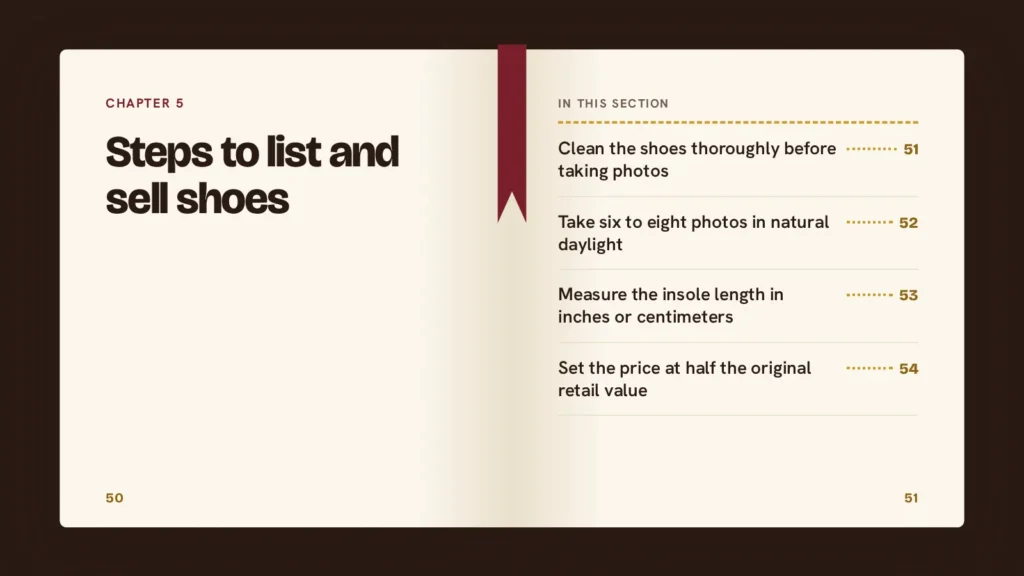
Clean the shoes thoroughly before taking photos. Wipe down soles with a damp cloth and remove dirt from treads. Use a soft brush on fabric uppers. Let them dry completely. Dirty shoes signal neglect to buyers. Clean items look newer and justify higher prices. This step takes ten minutes but doubles interest.
-
Take six to eight photos in natural daylight. Place shoes on a neutral surface like concrete or wood. Shoot from the side, front, back, and top. Capture close-ups of the sole tread, heel wear, and any flaws. Include a photo of the size tag inside. Clear images answer questions before buyers ask them.
-
Measure the insole length in inches or centimeters. Sizes vary between brands. A US 9 in one brand fits like an 8.5 in another. Write the exact measurement in the description. This reduces returns and angry messages. Use a ruler and place it next to the shoe in one photo for proof.
-
Set the price at half the original retail value. Check the manufacturer’s website for the current price. If the shoes are nearly new, ask for 60 percent. If they show moderate wear, drop to 40 percent. Round to the nearest five dollars for easy negotiation. Overpricing scares buyers away immediately.
-
Write a title with brand, model, size, and condition. For example, “Nike Air Max 90 Men’s Size 10 Good Condition.” Include key details in the first line. Describe flaws honestly in the body text. Mention if they were smoke-free or pet-free. Specificity builds trust and filters out irrelevant questions.
-
Select the correct category and location. Choose “Clothing & Accessories” then “Shoes.” Pick your precise neighborhood or city. Buyers filter by distance. Being too broad means fewer local views. Accurate location tags help people find you when searching nearby.
-
Respond to inquiries within one hour. Fast replies keep buyers engaged. Answer questions about fit or history politely. If someone asks if you can hold them, say no unless they pay a deposit. Holding items without payment leads to ghosting. Keep the listing active until money changes hands.
-
Meet in a public, well-lit place for exchange. Police station parking lots or busy coffee shops work best. Bring exact change if needed. Let the buyer inspect the shoes before paying. Cash is safest. Venmo or Cash App work if you verify the payment clears before leaving. Never go to a private residence.
The single judgment call that separates a good sale from a failed one is knowing when to lower the price. If you get no messages in seven days, drop the price by 10 percent. Waiting longer wastes time. Active pricing moves inventory.
Quick reference for common scenarios
Different situations require different approaches to pricing and presentation. Use this table to match your specific case with the right action. It covers the most frequent types of footwear sellers encounter. Adjust your effort based on the potential return.
| Situation | Action to take | Effort required | Watch out for |
|---|---|---|---|
| Nearly new athletic shoes | Price at 60% of retail | Low: quick photos | Fake buyer scams |
| Heavily worn work boots | Price at 20% or donate | Low: basic cleanup | No serious offers |
| Rare vintage sneakers | Research sold listings first | High: detailed photos | Lowball offers |
| Children’s outgrown shoes | Bundle pairs together | Medium: sorting | Size confusion |
| Designer heels with scratches | Disclose all flaws clearly | Medium: close-up shots | Return requests |
| Wet or muddy hiking boots | Clean and dry fully first | High: deep cleaning | Mold smells later |
Details that build buyer trust
Photo clarity and lighting
Experienced sellers use natural light from a window or outside shade. Direct sun creates harsh shadows that hide details. Overhead indoor lights cast yellow tones that make white soles look old. Shoot during the day for accurate color representation. Wipe the camera lens before starting. Smudged lenses create foggy images that look unprofessional. Buyers assume blurry photos mean hidden damage. Clear images show you have nothing to hide. This small effort increases message volume significantly.
Honest description of wear
Beginners often write “good condition” without explaining what that means. Experienced sellers list specific flaws. They note if the heel drag is uneven or if the inner lining has peeling. They mention if the shoes were worn only indoors. This transparency prevents disappointment at pickup. When a buyer sees exactly what they get, they feel confident paying. Vague descriptions lead to haggling and cancellations. Specificity saves time for both parties. It shows respect for the buyer’s intelligence and time.
Fixing common listing problems
Issues arise when expectations don’t match reality. Use this table to identify what went wrong and how to fix it. Most problems stem from poor communication or unclear photos. Addressing these quickly saves the sale.
| What you notice | What it usually means | What to do first | How to stop it happening again |
|---|---|---|---|
| Zero views in 3 days | Wrong category or bad title | Edit title with brand name | Use specific keywords always |
| Many views but no messages | Price is too high | Drop price by 10% | Research sold items first |
| Buyers ask same question | Missing info in description | Add size measurements to text | Include all specs upfront |
| Buyer ghosts after offer | Payment method unclear | State cash only in ad | Specify payment terms early |
| Complaints about smell | Odor not mentioned | Apologize and refund if local | Air out shoes before listing |
| Lowball offers under $10 | Item priced too high | Ignore or counter firmly | Set realistic initial price |
Safety and platform rules

Facebook Marketplace has strict commerce policies that sellers must follow. You can’t sell recalled items or counterfeit goods. The Federal Trade Commission enforces rules against deceptive practices which applies to false brand claims. Always verify authenticity before listing designer items. Selling fakes can ban your account permanently.
Meet buyers in public spaces only. Facebook recommends well-lit areas with surveillance cameras. Never share your home address. Use the platform’s messaging system for all communication. Moving conversations to text or email removes protection records. Keep all chats within the app until the deal closes. This creates a paper trail if disputes arise. Report suspicious users who ask for gift cards or wire transfers. These are always scams. Legitimate buyers pay cash or secure digital transfers upon pickup.
Time and effort costs
Selling shoes locally costs time rather than money. Cleaning and photographing takes about thirty minutes per pair. Responding to messages adds another fifteen minutes daily. Meeting buyers requires travel time and scheduling flexibility. You save on shipping fees and packaging materials. This makes it cheaper than online consignment stores. However, you trade convenience for higher profit margins.
Shipping services charge fees and take weeks to pay out. Local cash sales put money in your pocket immediately. The cost is your personal time and gas for meetups. If you value hourly wages highly, bulk selling might be better. For occasional items, the direct approach works best.
Maintaining listing visibility
Refresh your listing every few days to keep it near the top. Facebook allows you to renew items without deleting them. This bumps the post to recent searches. Don’t delete and repost the same item repeatedly. This can flag your account as spam. Instead, use the renew feature built into the interface.
Check messages daily. Unanswered queries make buyers look elsewhere. If an item sits for two weeks, consider donating it. Storage space has value too. Keeping unsold clutter costs more than the potential sale. Rotate stock regularly to keep your profile active.
When to use other methods
Local selling fails when you have rare or high-value items. Collectors want authentication guarantees that local cash deals can’t provide. Use specialized sneaker apps for relatively expensive items. These platforms verify authenticity and handle shipping. They charge fees but protect against fraud.
Also avoid local sales for hygiene-sensitive items like insoles or custom orthotics. Buyers hesitate to try these on strangers. Ship these through reputable medical supply channels instead. If you live in a rural area with low population density, local demand may be too low. National shipping platforms reach more buyers in that case.
Sellers often misjudge this threshold by testing local interest first. Listing locally for two weeks without inquiries confirms insufficient demand. Waiting longer wastes time and risks missing seasonal peaks on national sites. Know your market limits before starting.
Our team handles exactly this through Facebook Marketplace Account Setup.
Frequently asked questions
How long do shoes take to sell?
Most shoes sell within one to two weeks if priced correctly. Popular brands move faster, often in three to five days. Off-season items may take a month. Price competitiveness drives speed more than anything else.
Is it safe to meet strangers?
Yes, if you meet in public places like police stations. Always bring a friend if possible. Trust your instincts. If a buyer seems pushy or strange, cancel the meeting. Safety matters more than the sale.
What happens if shoes don’t fit?
Local sales are typically final. State this clearly in your description. Allow buyers to try them on at the meetup spot. Once they leave, returns are unlikely. Clarify this policy upfront to avoid arguments.
Can I sell worn-out shoes?
You can, but demand is very low. Some people buy them for parts or crafts. Price them inexpensively relative to wearable pairs. Be honest about the condition. Most buyers want wearable items, so expect few offers.
Does cleaning really help sales?
Yes, clean shoes sell twice as fast. Dirt suggests poor care and hidden damage. A quick wipe-down makes items look newer. It shows respect for the buyer. Spend ten minutes cleaning to save weeks of waiting.
How much should I discount?
Start at 50% of retail price. Drop by 10% every week if no interest. Final clearance should be around 20%. This balances profit with speed. Deep discounts move stubborn inventory quickly.
Next steps for selling
Clean your shoes and take bright photos today. List them at half the original price with honest details. Expect messages within a few days if the brand is popular. Stop and seek help if buyers ask for unusual payment methods like gift cards.

Derek Campbell writes about Facebook features, tools, and account management, covering topics such as account troubleshooting, Business Manager, Facebook Marketplace, and outreach strategies. His content also explores Facebook Groups, community engagement, and ways to connect with relevant audiences. His writing emphasizes practical Facebook know-how, from navigating Marketplace and managing business communities to building meaningful connections through Groups and outreach.
Checked against Facebook’s own help and policy pages on the date shown above.