Facebook Marketplace Return Policy for Sellers

The facebook marketplace return policy for sellers isn’t one universal rule: you and the buyer usually agree on returns for local sales, while eligible checkout orders can still be covered by Meta’s buyer-protection and refund rules. State and federal laws may also apply. Before payment, write down whether you accept returns, who pays return shipping, and what condition the item must be in. This guide explains the differences between local pickup, shipped orders, damaged items, scams, disputes, and legal return duties.
How Facebook Marketplace returns work
Facebook Marketplace doesn’t give every seller one standard return policy. Your return terms depend on how the sale happens, what you sell, the buyer’s payment method, and the consumer laws that apply where you and the buyer live.
For a local pickup, you and the buyer normally arrange the sale directly. You can say that all sales are final, accept returns within an agreed period, or offer a return only when the item doesn’t match the listing. Put the rule in Messenger before the buyer pays.
A shipped order can work differently. If the order uses Facebook or Meta checkout, the platform may review a buyer’s claim under its own commerce and purchase-protection rules. A seller’s “no returns” message doesn’t necessarily remove those platform rules.
The biggest misconception is that writing “no returns” protects you from every complaint. It doesn’t. That statement may describe your voluntary return policy, but it doesn’t excuse a false description, a hidden defect, counterfeit goods, unsafe products, or a legal duty to provide a remedy.
You should describe the item accurately, show important damage, and keep proof of the listing. Save photographs, serial numbers, tracking details, payment records, and the messages where you agreed on the sale. Don’t change the listing after payment if the original wording could matter in a dispute.
For US sales, return duties can also depend on state law and the type of transaction. The Federal Trade Commission explains that return and refund policies can be affected by state rules and by what a seller promised.
Steps for handling a Marketplace return
A careful return process starts before the listing goes live. The aim is to prevent a disagreement, not just win one after the buyer complains.
-
Choose the return terms before listing. State whether you accept returns, the condition required, who pays return shipping, and whether local pickup items can be inspected before payment. If you don’t accept voluntary returns, write “no voluntary returns” rather than suggesting that every complaint will be ignored.
-
Record the item’s real condition. Take clear photos of all sides, labels, damage, accessories, and serial numbers before handing it over or packing it. For electronics, record the item working without showing private account information. Don’t publish a serial number publicly if it could help someone misuse it.
-
Match the listing to the item. Include the correct model, size, color, age if known, included parts, defects, and working status. If you’re unsure about a feature, say that you haven’t verified it instead of guessing.
-
Confirm the sale in writing. Before payment, send a short message with the agreed price, delivery or pickup method, condition, and return terms. Ask the buyer to confirm that they understand the terms. Keep the conversation inside Messenger when possible.
-
Use a safe handoff. For local pickup, let the buyer inspect the item before payment when practical. Don’t pressure the buyer to pay before inspection, and don’t meet inside your home if a public meeting place is suitable.
-
Pack shipped goods carefully. Photograph the item in the package, the sealed package, and the shipping label. Use tracking and keep the receipt. Don’t ship to an address that differs from the approved order details without checking the platform’s rules first.
-
If the item is materially different from the description, offering a return may be safer than arguing over wording.
-
Escalate platform orders through Meta. If the buyer opens a platform case, answer inside the stated case process and upload the listing, messages, photos, and tracking proof. Don’t send a separate refund that could create confusion unless you know how it affects the open case.
The key judgment is whether the complaint is about a genuine mismatch or only a change of mind. If the item is materially not as described, work toward a documented return; if it matches the listing and the buyer simply changed their mind, follow the return terms you gave before payment.
Handling a counterfeit claim, dangerous product, payment fraud, or legal demand isn’t a normal do-it-yourself step. Stop sending money or personal information, keep the evidence, and contact Meta support, your payment provider, a consumer-protection office, or a lawyer as appropriate.
Marketplace return terms by sale type

These figures aren’t fixed deadlines. They’re checkpoints in the sale, because Facebook Marketplace return rights change with the transaction method and the reason for the complaint.
| Situation | What to use | How long | What to watch for |
|---|---|---|---|
| Local pickup with buyer inspection | Written agreement in Messenger | Before payment | The buyer may inspect the item, so record what was shown and accepted |
| Local pickup with a hidden defect | Listing, photos, and messages | As soon as the defect is reported | A “no returns” term may not protect a seller who concealed a major problem |
| Shipped order through platform checkout | Meta’s order and dispute process | Follow the deadline shown in the case or order screen | A private agreement may not override platform review |
| Shipped order arranged outside checkout | The payment provider’s rules plus your written terms | Use the provider’s current deadline | Chargebacks and payment disputes can follow a separate process |
| Item damaged during delivery | Tracking, package photos, and carrier claim process | Start when the damage is discovered | Keep the box and packing materials until the claim is resolved |
| Buyer simply changes their mind | Your stated return terms | Use the period you promised, if any | Don’t promise a return window you can’t manage |
| Suspected counterfeit or unsafe item | Stop the sale and preserve evidence | Immediately after the concern appears | Don’t relist it or mail it to another buyer |
A seller’s own deadline only controls the voluntary policy the seller offered. Platform rules, payment rules, and consumer law can still create a separate path.
Details that protect sellers
Good return handling begins with a listing that a stranger can understand. Use a plain title, then list the exact model and condition. Put defects near the top instead of hiding them at the end of a long description. If a photo shows damage, mention that damage in words too.
The order of your records matters. Save the final listing first, then the buyer’s questions, your answers, payment evidence, packing photos, tracking receipt, and delivery confirmation. If the listing changes later, your saved copy can show what the buyer saw when agreeing to buy.
Check the item again before packing. Confirm the model, color, accessories, and working status against the buyer’s messages. A common seller mistake is sending the right-looking product with the wrong accessory or size; that can turn a simple sale into a return, a shipping cost, and a payment dispute.
For local sales, let the buyer test reasonable features before payment. Don’t let that become an invitation to open sealed goods, remove safety parts, or access another person’s account. For shipped sales, don’t erase device data only after the buyer complains; remove private data before shipping while keeping evidence of the device’s condition.
Leave personal opinions out of the dispute. A short message such as “The listing said 128 GB, but the label shows 64 GB; I can arrange a return” is stronger than an angry exchange. If the buyer’s claim doesn’t match the evidence, state the facts once and use the platform’s dispute route instead of sending repeated messages.
Marketplace return problems and fixes
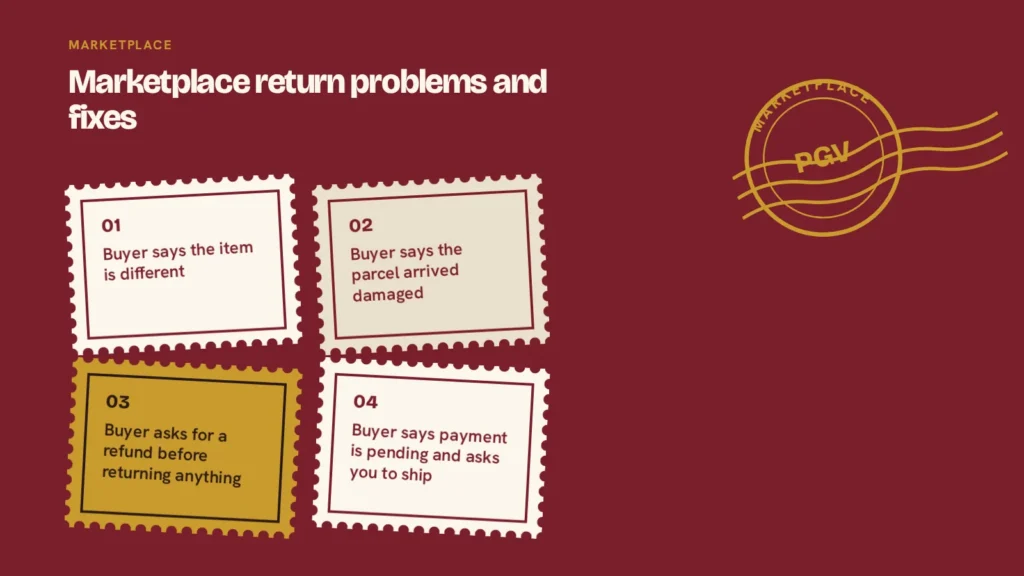
The first step is to identify what the buyer is actually claiming. A return request, a damaged parcel, an unauthorized payment, and a counterfeit accusation need different evidence.
| What you notice | What it usually means | What to do first |
|---|---|---|
| Buyer says the item is different | The listing, photos, or shipped item may not match | Compare the buyer’s photo with the saved listing and your packing record |
| Buyer says the parcel arrived damaged | The damage may have happened during transport | Ask for photos of the item, box, label, and packing before discussing fault |
| Buyer asks for a refund before returning anything | You don’t yet have the item back | Don’t refund blindly; use the platform case process or agree on tracked return terms |
| Buyer says payment is pending and asks you to ship | The payment may not be complete or may be fraudulent | Confirm payment in the official account, not through a screenshot or email |
| Buyer threatens a chargeback | The payment provider may review the transaction separately | Save the listing, messages, delivery proof, and payment record, then answer the provider |
| Buyer reports a counterfeit product | The item may be prohibited or unsafe to sell | Stop relisting it and preserve purchase and authenticity records |
Don’t click payment links sent in a Messenger message. Open the official app or website yourself and check the transaction there. If the platform asks for a response, meet its stated deadline rather than relying on a promise made in chat.
Laws and platform limits
US return rules aren’t identical in every state. The Federal Trade Commission says sellers should disclose their return or refund policy clearly, and state law may control what happens when a seller offers no return policy or makes a specific promise. Check the law in the state connected to the sale before relying on “all sales final.”
A seller also shouldn’t misrepresent an item, hide a material defect, sell counterfeit goods, or describe a used product as new. A private Marketplace listing doesn’t remove rules that apply to advertising, consumer fraud, restricted products, or product safety.
Meta’s platform terms and purchase-protection rules can apply separately from your own wording. For an order handled through platform checkout, read the exact case notice and follow its evidence and response instructions. The available process may differ from a local cash sale.
If the issue involves a recalled product, weapon, controlled item, unsafe child product, counterfeit brand, or suspected fraud, don’t try to solve it by relisting the item. Contact the relevant regulator, payment provider, Meta support, or a qualified attorney. A lawyer should handle a formal legal demand or a high-value dispute.
Records after the sale
Keep the final listing, messages, photos, payment record, and delivery proof together. Don’t delete the conversation after the buyer says the sale is complete. These records help if a payment dispute appears later or if you need to show what condition the buyer accepted.
For electronics, keep the serial number and a dated condition photo privately. For collectibles, vehicles, and other high-value goods, keep purchase records and authenticity documents. Don’t send original documents unless the buyer, platform, or authority genuinely needs them.
There’s no single safe holding period for every Marketplace sale. The right time varies with the item, payment method, platform case window, and local law, so read the order screen and your payment provider’s current rules. If a chargeback or complaint is already open, keep everything until that matter is closed.
If you accept a return, agree in writing on the return address, shipping method, item condition, and refund timing before the buyer sends it. Inspect the returned item against your photos, but don’t withhold money for damage that wasn’t caused by the buyer.
When Marketplace isn’t right
Facebook Marketplace isn’t a good choice when you need a guaranteed return system, automatic seller protection, or professional product support. Use a platform designed for that type of sale, and read its seller terms before listing.
It’s also the wrong approach for regulated, recalled, counterfeit, or potentially dangerous goods. Don’t move those items to another marketplace after a buyer raises a safety concern; check the relevant government or manufacturer guidance instead.
Avoid Marketplace when you can’t meet safely, verify payment, or document the item’s condition. If the buyer wants an unusual payment method, asks you to ship before payment clears, or changes the delivery address at the last minute, pause the sale. A slower sale is cheaper than losing the item and the money.
If you’re selling regularly as a business, casual “no returns” wording may not fit your legal duties. Use written business terms and get advice for the states or countries where you sell.
Our team handles exactly this through Facebook Marketplace Account Setup.
Frequently asked questions
Can a Facebook Marketplace seller refuse a return?
Yes, a seller can often refuse a voluntary return when the buyer only changed their mind and the seller clearly gave no-return terms. That doesn’t excuse a false listing, hidden material defect, counterfeit item, or platform rule. For checkout orders, Meta may review the buyer’s claim under its own process, so the seller’s message isn’t always the final decision.
Why did Facebook approve a buyer refund?
Facebook may approve a refund because the order falls under a platform protection or dispute process. Possible issues include an item that wasn’t received, a product that differs materially from the listing, or evidence that supports the buyer’s claim. The exact reason should appear in the order or case notice. Read that notice before sending more messages.
How long does a Facebook Marketplace return take?
There isn’t one universal number of days. The time depends on whether the sale was local or shipped, how fast the buyer sends evidence or the item back, the carrier, the payment provider, and any platform deadline. Read the active case screen for the controlling date, and keep tracking until the return or refund is complete.
Is it safe to accept returns from Marketplace buyers?
Yes, but use a documented process. Confirm the buyer’s identity through the platform, agree on tracked shipping, and don’t refund before the item is returned unless you accept that risk. For local returns, meet in a public place and inspect the item against your photos. Never share passwords, security codes, or banking login details.
What happens if a buyer lies about the item?
Meta or the payment provider may review the evidence rather than accept either person’s statement automatically. Submit the original listing, dated photos, messages, tracking, delivery proof, and packing records. Don’t threaten the buyer or alter the listing. If the amount is high or fraud is suspected, contact the payment provider and consider legal advice.
Can I say all sales are final on Facebook Marketplace?
Yes, you can usually state that you don’t offer voluntary returns for a local sale, but the wording has limits. It doesn’t protect a seller who lies, hides a major defect, sells prohibited goods, or ignores a platform refund process. Local consumer law can also restrict how a return policy works, especially for business sellers.
What should I do if the buyer returns a different item?
Document the package, label, returned item, and condition before changing anything. Compare it with your private serial-number and condition records, then report the problem through the payment or platform case. Don’t destroy the item or accuse the buyer without evidence. A seller who skipped condition photos may have a harder time proving a switch.
Conclusion
Before your next sale, check Meta’s current seller and buyer-protection terms, then add your return conditions to the listing and messages. Keep photos, tracking details, and receipts until the transaction is fully settled. Clear records won’t prevent every dispute, but they’ll help you respond calmly and protect your position.

Derek Campbell writes about Facebook features, tools, and account management, covering topics such as account troubleshooting, Business Manager, Facebook Marketplace, and outreach strategies. His content also explores Facebook Groups, community engagement, and ways to connect with relevant audiences. His writing emphasizes practical Facebook know-how, from navigating Marketplace and managing business communities to building meaningful connections through Groups and outreach.
Checked against Facebook’s own help and policy pages on the date shown above.